The next generation
monopile foundations
for offshore wind turbines
Manufacturing, design and handling challenges

The Urge to Scale Up Offshore Wind
Offshore wind production has grown exponentially over this century, but so far we have just witnessed the tip of the iceberg. With Climate Change pressing ever more and decarbonization becoming a rising policy priority in national and supranational agendas across the globe, offshore wind power will play a vital role in the transition to net zero. Before the end of this decade, it is expected to experience a 7-fold increase. Besides, if we are to remain on track with the Climate Neutrality target, by 2050, we should multiply by fifty today´s offshore wind installations.
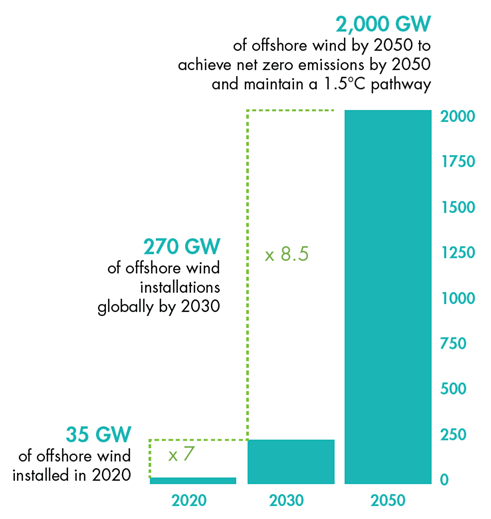
Closing the Offshore Wind Gap by 2050. Source: GWEC
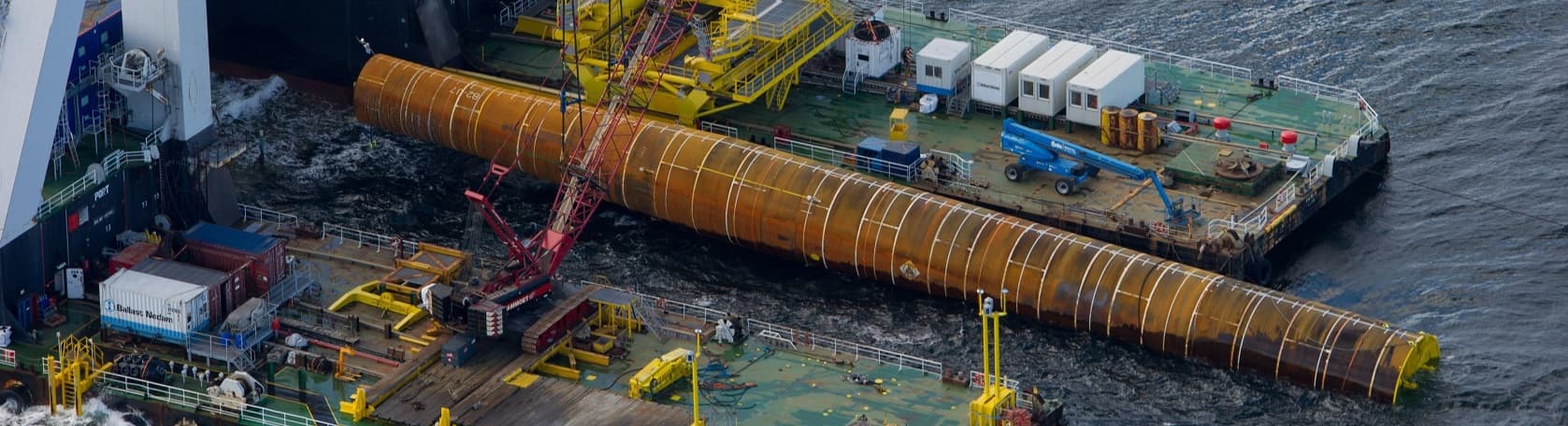
Citius, Altius, Fortius
The technical challenges are colossal, as we need to go bigger, further and deeper into the ocean. The world´s first offshore turbine farm, installed 30 years ago at Vindeby (Denmark), had turbines of only 450kW, with a rotor diameter of 35m, merely 2 km from shore and a maximum water depth of 4m. Before the end of this decade, we are likely to witness wind turbines of 20MW and rotor diameters beyond 250m, with wind farms 200Km far from the shore and water depths beyond 60m. These figures seemed science fiction merely a few years ago… and they still do!
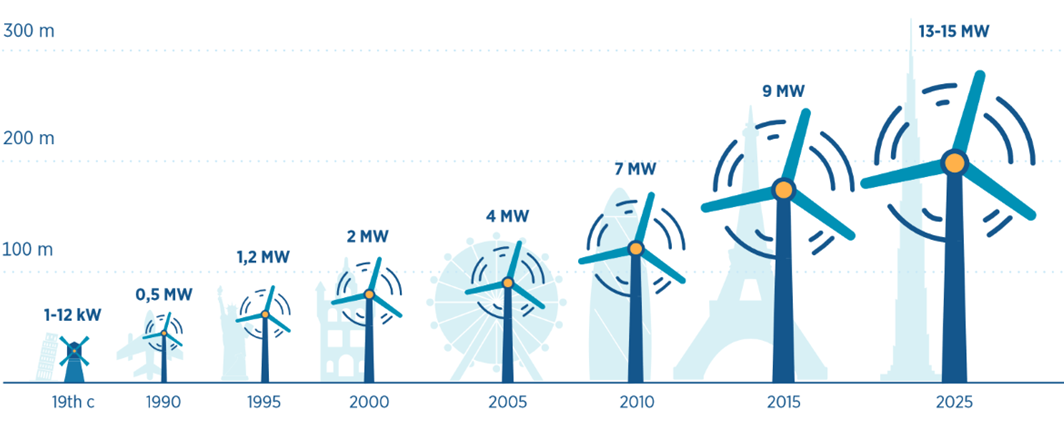
Evolution of Wind Turbine Power and Rotor Diameters over Time. Source: IRENA
Towards XXL Foundation Structures
These monstruous turbines also imply larger supporting structures, and manufacturers are already working on the next generation of fixed foundations: XXL Monopiles with lengths up to 120m. These ultra-large structures require greater diameters and weights beyond 2,000 tonnes. They create tremendous logistical challenges in the manufacturing, handling, transportation and final assembly processes.
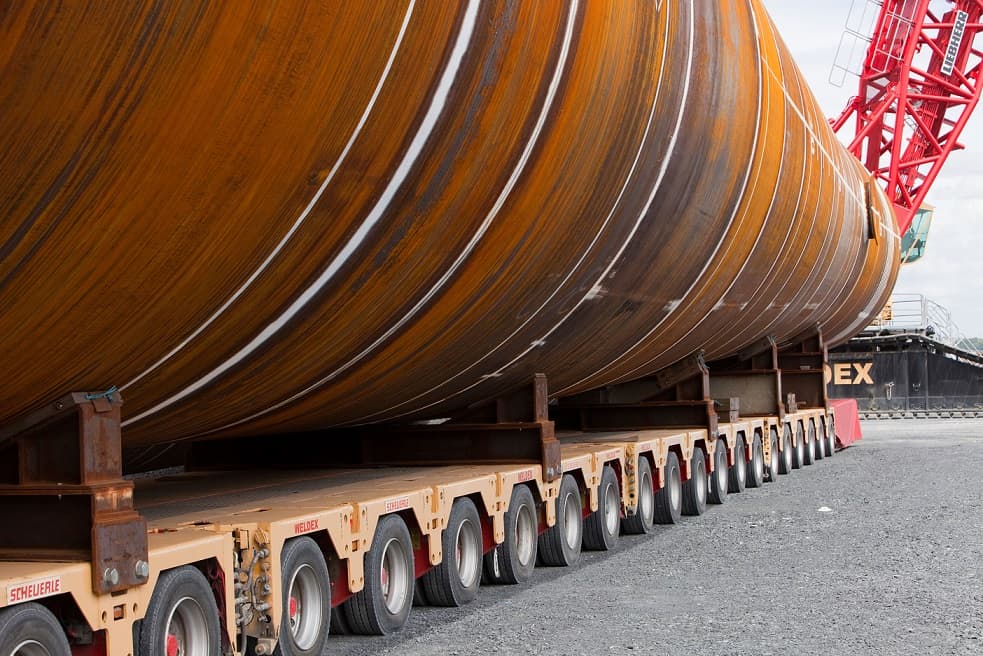
Current manufacturing standards are no longer valid as we push the technological boundaries. If we held the D/t ratio constant, a 25% increase of the monopile diameter (e.g. from 8m to 10m), would approximately double its weight, and a 50% increase in the diameter (e.g. from 8m to 12m) would triple it. Hence, weight reduction becomes imperative in the design of the next generation monopiles, and recent studies suggest that slenderness ratios up to 160 could be feasible. To prevent plastic deformation and damage when handling the cans, we need to rethink the whole fabrication process, including the supports design during the manufacturing, transport, storage and assembly.


Pioneers in OffShore Wind Engineering
BOSLAN is a Spanish company with over two decades of experience offering highly specialized technical, engineering and consultancy services. Headquartered in Bilbao, it has permanent offices in 9 countries and 750+ employees. It is currently running projects in 30 countries.
In the last few years, Boslan has been in charge of the development of state-of-the-art offshore wind farms across the globe, covering the construction project cycle in projects such as Wikinger, Baltic Eagle, East Anglia One and Saint-Brieuc.
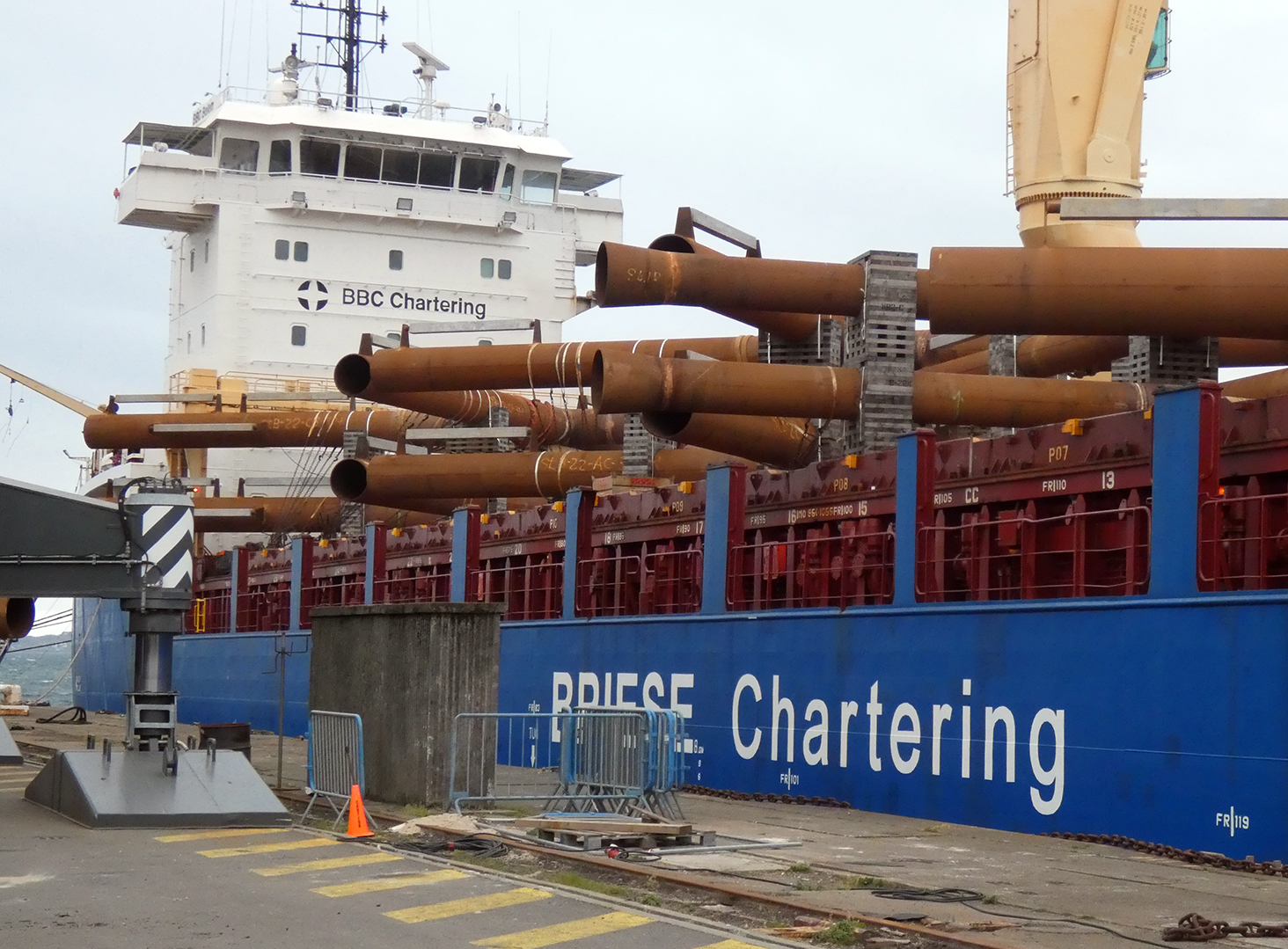
Load #12 of Jacket components to be transported from Navantia-Windar manufacturing facilities in Brest (France) for the final assembly in the Navantia facilities in Fene (Spain). Successfully completed last 06.04.2022. Photo: NAVANTIA
Boslan´s practical and technical know-how in the design, manufacturing, assembly and handling of fixed foundation structures has made us a preferred partner for developers who need to confront the technical challenges of the next generation monopile foundations.
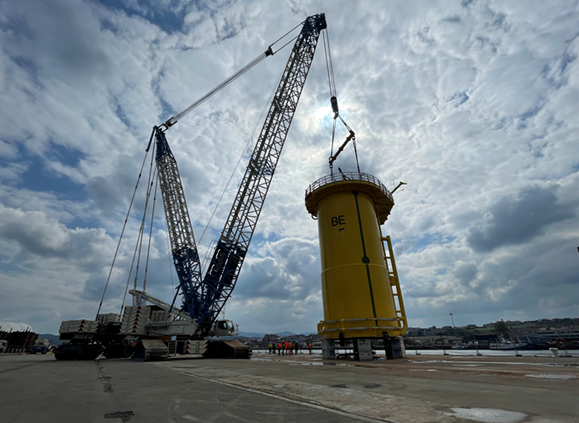
Baltic Eagle Project. First Transition Piece Fully Assembled. Photo: Windar